

This week on Everybody in the Pool
First, a couple of hard truths:
The number of billion-dollar storms in the U.S. is increasing dramatically (and, obviously, around the world)
Three million homes are damaged by natural disasters in the U.S. every year
Slow recovery after natural disasters can lead to long-term financial decline for affected families
Disaster recovery is still stubbornly stuck in the past. After the storm comes, sadly, a parade of fraudsters, mountains of paperwork, and a confusing patchwork of who pays for what. Improving this industry is, functionally speaking, climate adaptation, and rebuilding after storms is also an opportunity to build in resilience to the next major event.
On the latest episode of Everybody in the Pool, I talked with Susan Hunt Stevens, founder and CEO of Tessi AI, which is building a tech layer for disaster recovery that’s meant to match the speed and scale of the problem. Tessi brings homeowners, vetted contractors, insurers, and government and nonprofit funders onto one platform, and uses AI-driven damage assessments (including aerial imagery) to evaluate homes quickly, often within 24 hours. We also got into why so few households are truly covered when floods and hurricanes hit, how scammers exploit the chaos after a disaster, and a surprisingly hopeful angle: repairs can be a moment to rebuild smarter, with climate-adaptive upgrades that make the next disaster less devastating.
Listen to the episode here or wherever you get your podcasts!
Recommended reading
Boy, no one is prepared for the hard realities of climate change, are they? It turns out that the Department of Defense just now started tracking the cost of extreme weather to military installations, despite already incurring at least $15 billion worth of damage over the past 10 years. And despite being required to strengthen resilience as part of disaster recovery (see? it’s a thing), of something like 500 military installations, only 47 had completed that requirement.
DoD only recently began tracking the cost of extreme weather, despite billions in damage (Defense News)
Hey, speaking of resilience, I mentioned in a recent newsletter that wind and solar are relatively evenly distributed assets, and that you don’t have to fight wars over sunshine. Also, renewable energy remains cheaper and faster to deploy than fossil fuel sources. So as we’re in the midst of this new god-only-knows-what-it-will-bring conflict in the Gulf region, renewables are starting to look even better, all over again. First, you know I’m obsessed with insurance being the be-all, end-all of financial incentive structures? Well, this happened:
Bloomberg has a writeup about how prolonged conflict in the Middle East could reshape the oil and gas industry and make the need for renewables even greater (with, of course, some predictable hand-wringing about how “it’s not that simple,” but it simultaneously never is and always is that simple, actually):
I like this bit in particular, pointing out that renewables deployment is also resilience:
The European Union has already seen the benefit of pivoting to renewables after Russia’s invasion of Ukraine, though it also sought alternative sources of gas which are now under threat. Between 2019 and 2024, EU countries installed enough wind and solar capacity to avoid burning 92 billion cubic meters of gas and 55 million tons of hard coal in 2024, according to Agora Energiewende.
“We’ve had tangible results,” said Frauke Thies, the think tank’s Europe director. “It was thanks to renewables that Europe wasn’t hit harder by the last energy crisis.”
The case for renewable energy is and actually always has been a national security case. Here’s a good writeup making that exact point:
And finally, in good news on the renewables front, as is almost always the case, the economics are already winning.
Buying advice
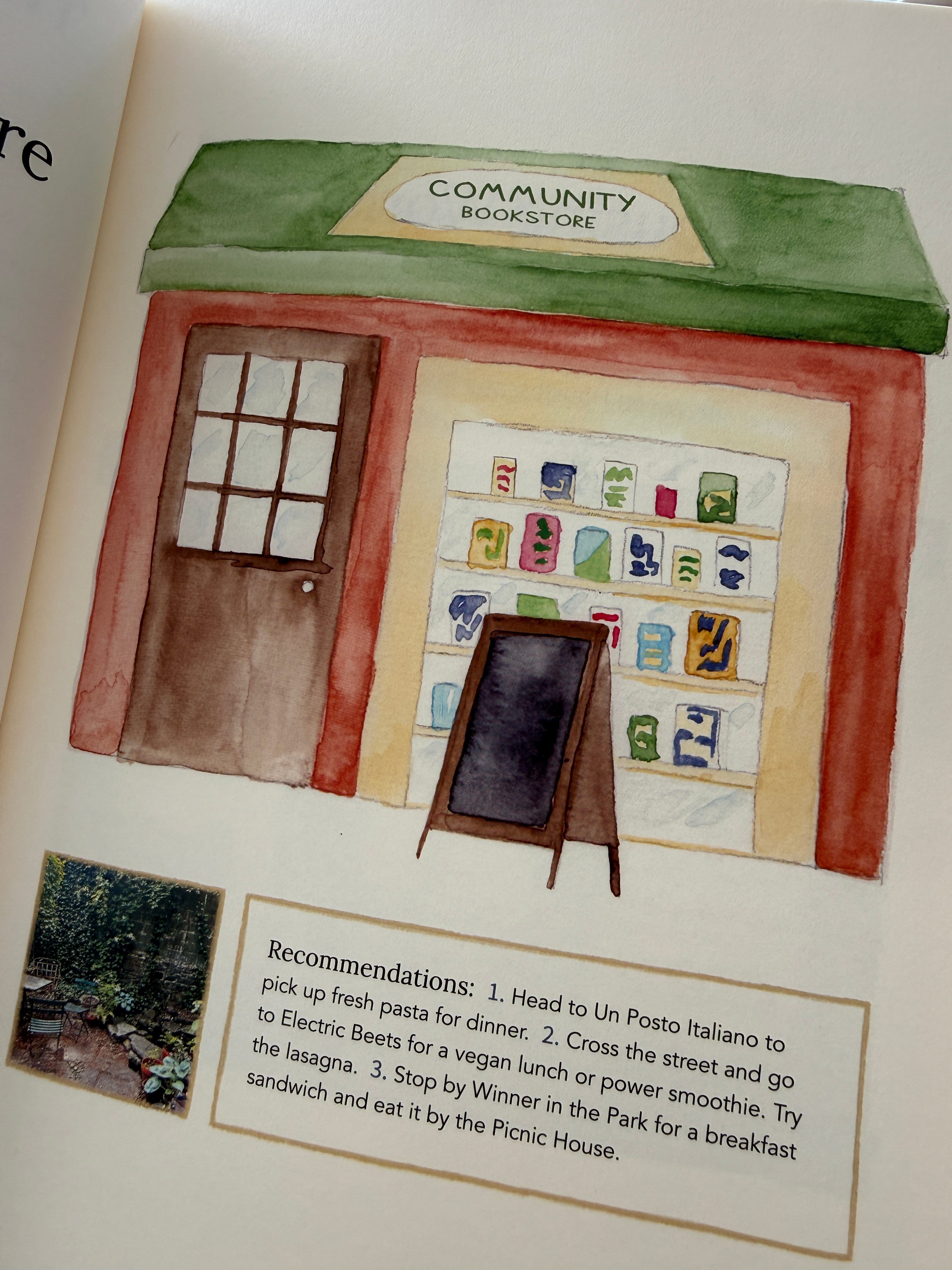
Last week I went on an art tangent; this week I’m talking about art again, but it’s related. I have been following Nicole Kelner for a while now. She uses beautiful watercolor art to tell stories about climate change and inspire climate action, and she’s just wonderful. And now, in the midst of what feels like the polar opposite of a calm and peaceful time, she’s got a new book out called Quietest Places in New York City: Finding Calm & Peace in Urban Chaos. It’s art and travelogue and contains hints for finding peaceful places in your own city, and honestly, even though I’m on an entirely opposite coast, I just loved flipping through (and making a list for next time I’m there). Peace is a luxury, and never more so than in terrible times. I appreciate the push to seek it out.
We lost our house in Harvey in 2017, so our dealing with insurance was to total the house and then fight over the contents valuations. That was bad enough, but many of our neighbors had horror stories from dealing with their insurance adjusters, contractors (even good ones had trouble completing repairs due to lack of workers, supplies and building materials, and the undervaluation of needed repairs), scammy contractors, FEMA forms, insurance claims, charity grants, etc. Even working with volunteer teams, homeowners are frequently overwhelmed with what needs to be done next and in what order.
The promise of Tessi is so exciting for so many people and in so many lives. I’ll be keeping up with Tessi’s roll out and expansion.