

This week on Everybody in the Pool
The podcast hiatus is over, and we’re back in the swing for the new year. The first episode out of the gate features an extra audacious startup founder looking to totally upend the built environment. Nathan Silvernail is co-founder and CEO of Plantd, which is creating carbon-negative building materials, starting with a replacement for engineered wood that’s made out of grass.
Side note: Nathan is one of a few founders I came on who originally started at SpaceX, and in the process of trying to find ways off this planet, found himself interested in making this planet better, instead. What I find is that these founders tend to have a big vision, and have been taught to think about what the world might look like if you stripped away what we currently have and started over. They all call this “first principles thinking,” but I’d rather explain it because I don’t want to sound like a total tech bro and half the people they say this to don’t know what it means.
So anyway, here comes Nathan with an audacious vision for the built environment. I say this because the Plantd model puts Nathan in the business of agriculture, manufacturing, and hardware, all at the same time. No big. But despite total reinvention on the back-end, the product that comes out can serve as a drop-in replacement for engineered wood, known as OSB (oriented strand board).

The ultimate vision is one of abundance — trees simply can’t scale to build the number of homes we need to build affordably; more local supply chains; and reduced exposure to climate risk that makes engineered wood a riskier proposition than it already is.
Listen to the episode here or wherever you get your podcasts!
You know I love a theme …
That gets me to what I hope will be an over-arching theme for me in 2026: reinvention. I actually like this idea of first-principles thinking, despite how jargony it can be, because it upends the idea that we have to do things the way we are currently doing things. Everything was up for grabs at one point, and some path dependency occurred that put us where we are, but that doesn’t mean we can’t do it over, and do it better, sometimes by hacking the systems we already have. Look for more writing on this topic in the coming year, and you might be hearing it a lot in episodes, as well.
Recommended reading
On that note, 2026 started off with a reminder of the crappy way we have been doing things for decades now: fueling our lives and economic expansion with fossil fuels, specifically oil, and using oil as a pretext to make imperialistic land grabs. Be honest, invading a country for oil is actually the most traditionally Republican thing the Trump administration has done so far, in addition to trying to sell us the ongoing lie about trickle-down economics.
Just after the Venezuela assault, Bill McKibben offered a must-read reminder that, in fact, it really does not have to be this way. The energy transition doesn’t just ensure a livable planet for humans and animals—it could also lead to an end to the resource wars that, themselves, make the planet a lot less livable.
What if we could, simply by supporting an environmentally and economically sound transition to clean energy, remove the reason for the fighting? I don’t know how to stop the bully from beating people up for their lunch money—but what if lunch was free, and no one was carrying lunch money? Not for the first time, and not for the last, I’m going to make the observation that it’s going to be hard to figure out how to fight wars over sunshine. — Bill McKibben
Buying advice
I went to CES on fairly short notice this year, because I was invited to moderate a panel at what turned out to be an amazing event held by Back Market, which is a marketplace for refurbished technology.


The event was called The Slow Tech Awakening; it featured a short documentary about what happens to discarded technology — let me put it this way, you could do a drone shot of the CES floor and then do a slow dissolve to the Dandora dumpsite in Nairobi, Kenya, where waste pickers comb through mountains of waste looking for discarded electronics, which they disassemble without protective gear and often burn into toxic smoke and sludge to get at the valuable raw materials within.
Then, I moderated a panel with Sandra Goldmark of the Columbia Climate School, Liz Chamberlain of one of my favorites, iFixit, and Joy Howard, the CMO of Back Market, formerly of Sonos and Lyft. We talked about how to break the chokehold of the “upgrade economy,” how reuse, repair, and circularity are huge economic opportunities, and we previewed iFixit’s Worst in Show awards, which tackle environmental impact, privacy, repairability, overall shitification (their word!), and that feeling you so often have about new technologies — who even wants this?
It was an awesome event, I loved it, and it was a cool alternative to CES itself and, for me, a bit of atonement for all the years I spent telling people to buy shiny new tech.
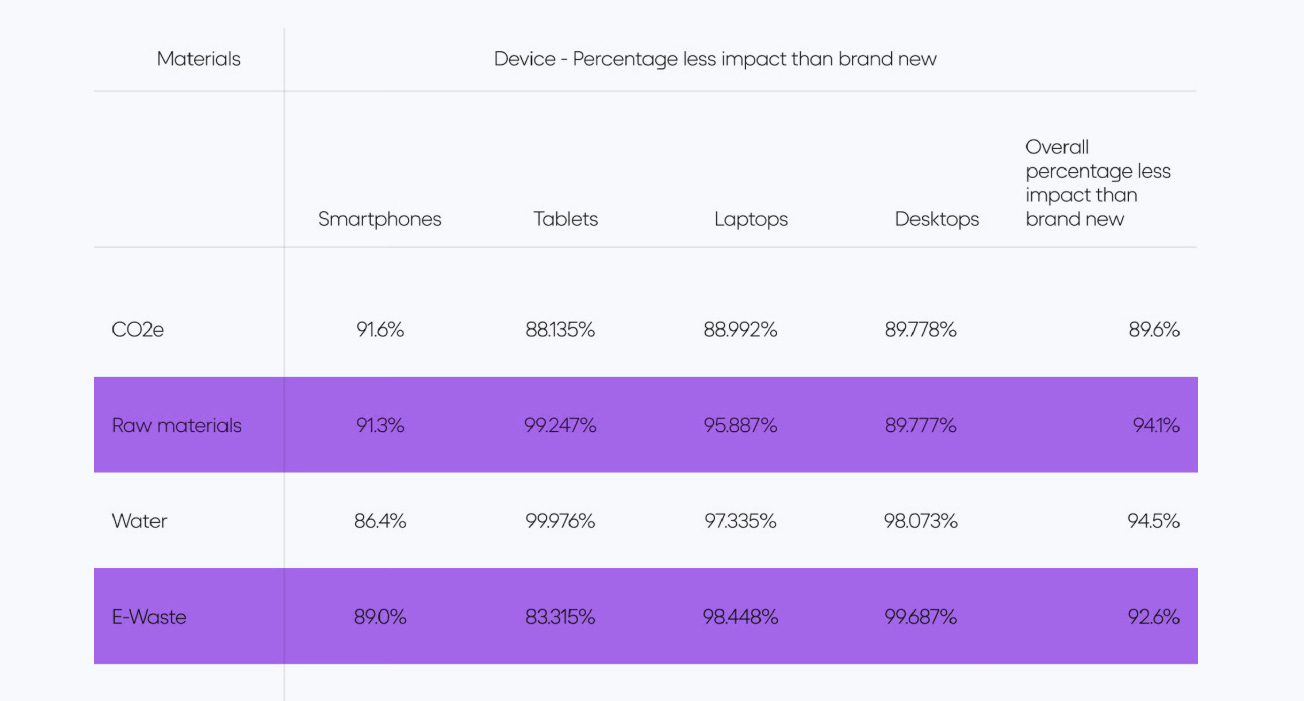
Anyway, that’s a combination of a humble brag about what I was up to at CES but also legitimate buying advice, because it turns out … Back Market exists! For buying used and refurbished technology! Anytime you want! And selling used technology too, not for nothing. But just because a shiny new thing comes out every year does not mean you need a new thing every year. I’ve been trying to buy used whenever I can, and consumer electronics in particular have a huge environmental footprint to produce, so this is a site where you can get just about any brand you want, way cheaper than new, and feel all kinds of smug across the board. Find out how smug, in fact, by reading the research they published in 2023 about the environmental impact of buying used versus new gadgets. Or, here it is in picture form:
Ok, that’s it for this week, everyone. I’m excited to be back. The last year was a hard one in a variety of ways; I’m lucky to work for myself and be able to take the time I need, but I’m also energized, recommitted to this work and this audience, and excited to put all that behind me and do awesome stuff in 2026. Thanks for bearing with me.